Patent Analytics as a Deal-Sourcing Signal: Mining IP Filings for M&A Targets
Most M&A target lists start the same way: a banker's pitch book, a PE platform's thesis, a strategic's competitive map. By the time a target appears on those lists, the company has typically already met five other potential acquirers, and the entry price reflects it.
Patent filings tell a different story — earlier and quieter. Systematic analysis of patent data routinely surfaces acquisition candidates 12 to 18 months before they appear in a banker's process. For acquirers who can read the signal, IP analytics is one of the most under-exploited deal-sourcing instruments available.
The signals in patent data
A handful of patterns in EPO, USPTO, JPO, and WIPO filings correlate strongly with acquisition readiness:
1. Citation-graph centrality. When a small company's filings start being cited disproportionately by larger players in the same technology cluster, it is a leading indicator that strategics are studying the asset. Citation forwardness — the rate at which a target's patents are cited within 24 months of publication — is a sharper signal than headline patent count.
2. Inventor mobility. When key inventors named on a target's foundational patents are recruited by competitors, or when filings from a target slow as inventors depart, the IP "half-life" of the asset is shortening — and the window for a sale at a defensible valuation is closing. Conversely, when inventors from large incumbents join a small target, the asset is accumulating capability that the market has not yet priced.
3. Assignee changes and continuation filings. A surge in continuation, divisional, or CIP filings often precedes a sale process — sponsors and founders cleaning up the portfolio, broadening claims, and de-risking chain-of-title. A sudden assignee change to a holding entity is an even louder signal.
4. Geographic divergence. Filings that begin in one jurisdiction (e.g., DE/EP only) and then expand to PCT and U.S. national-phase entry suggest a deliberate internationalization of the asset's value — typically in advance of a U.S. fundraise or sale.
5. Litigation pre-positioning. A target that initiates an opposition, IPR, or declaratory-judgment action against an incumbent is often signaling either confidence in its position (defending value before sale) or preparing to be acquired by that incumbent's competitor.
A worked example: legal-tech and patent analytics itself
Consider the patent-analytics segment over the past 36 months. The acquirers who were systematically tracking USPTO and EPO filings in NLP-on-claim-text, semantic-similarity search, and patent-family clustering identified the eventual winners well before the bankers did. The signals were visible: rapid forward citation, repeated inventor moves from incumbents, and PCT expansion timed to product launches. The deals that closed in 2024–2026 priced those signals — the ones that didn't track the data overpaid in confirmatory diligence or missed the assets entirely.
Building the workflow
A practical patent-analytics deal-sourcing pipeline does not require a research lab. The building blocks are accessible:
Data layer: EPO Open Patent Services, USPTO bulk data, WIPO PATENTSCOPE, supplemented by a commercial provider (Patsnap, Questel Orbit, LexisNexis IP) for curated assignee and family data.
Enrichment layer: company-level joins to Crunchbase / PitchBook / CB Insights to filter for size, stage, and ownership.
Signal layer: a weekly run that computes citation centrality, inventor flow, and assignee changes within a defined technology cluster.
Triage layer: a human review of the top 20 signals per cluster per month, with a 30-minute first-call standard for the top 5.
The output is a ranked, refreshed target list grounded in primary data — not in banker pitch books.
Why this matters now
In a market where dry powder is high, multiples are compressed, and the gap between the best-prepared acquirer and the next-best is widening, proprietary deal flow is the single most valuable thing an M&A team can build. Patent analytics is one of the few inputs that the entire market is not yet systematically using — and that, by definition, makes it the source of edge.
Advertising section
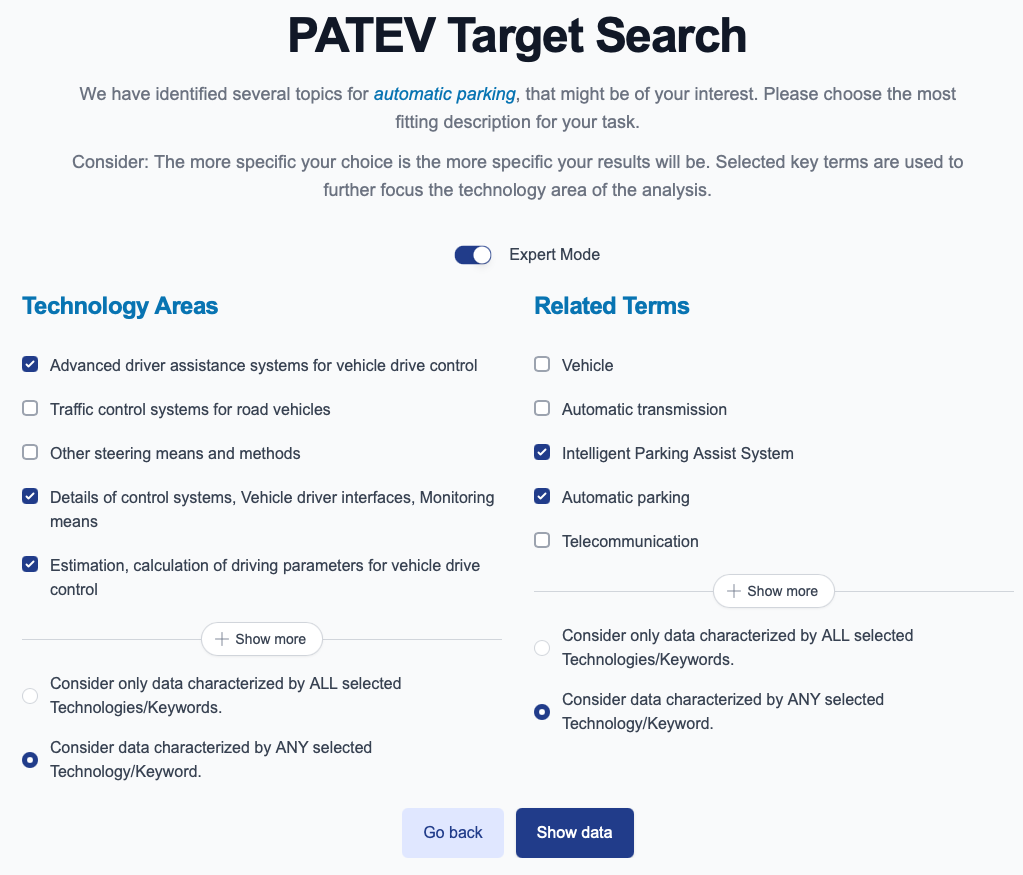
Let us schedule a free demo to answer the following M&A relevant questions with this AI-based search and analysis called TargetSearch:
Which companies are currently dominant in your technology/product area and geographical region of interest (indicated by the number of their patent families)?
Which companies are the leading developers today and the key market players of the future? (Recent patent applications indicate current development activity and new current or planned products and services.)
In which geographical regions are the most recent patenting (=developing, with actual or planned production) companies located?
What is the ratio of the recent patent family volumes between companies? This is an indication of recent or projected product/service sales value or market share proportions.
Build your AI skills by licensing our offerings

A Modern Post-Merger Integration Playbook: From M&A Models to AI Solutions
By Dr. Karl Michael Popp
Master integration due diligence to transform your M&A success. Learn more at manda-automation.com