A step by step approach to leveraging AI in M&A boutiques
In the high-stakes world of mergers and acquisitions, boutique firms operate with speed, precision, and a keen eye for value. Artificial intelligence is no longer a luxury—it’s a practical framework that can sharpen deal sourcing, due diligence, and post-deal integration. Here is a structured, step-by-step approach to embedding AI into an M&A boutique’s workflow.
1) Define the strategic lanes where AI can add value
- Sourcing and screening: Use AI to parse market signals, identify under-the-radar targets, and score opportunities based on strategic fit, financial health, and growth potential.
- Target valuation and modeling: Apply AI-driven models to stress-test scenarios, calibrate valuation ranges, and uncover non-obvious synergies.
- Due diligence acceleration: Automate document review, contract analysis, and risk flags across financial, operational, and regulatory domains.
- Integration planning: Forecast post-merger synergy realization, cultural fit, and change management needs through data-driven insights.
2) Establish data foundations and governance
- Inventory data assets: financials, customer data, operating metrics, legal documents, and market intelligence.
- Data quality and standardization: Clean, normalize, and tag datasets to enable reliable AI outputs.
- Privacy and ethics: Implement governance to ensure data usage complies with regulations and client expectations.
- Access controls: Limit sensitive data exposure by role, ensuring responsible AI deployment.
3) Choose the right AI tooling and architecture
- Sourcing tools: Deploy NLP-enabled search, sentiment analysis, and predictive scoring to surface high-potential targets.
- Modeling platforms: Use machine learning for scenario analysis, valuation overlays, and risk assessment.
- Diligence automation: Leverage document AI (contract summarization, obligation extraction) and anomaly detection.
- Collaboration layer: Integrate AI insights into existing CRM, deal rooms, and project management systems.
4) Embed AI into the deal lifecycle
- Deal sourcing: Create a repeatable pipeline with alerts for newly identified targets and signals aligned to the firm’s investment thesis.
- Initial screening: Apply automated scoring to filter pipelines, enabling partners to focus on the most compelling opportunities.
- Teaser to LOI: Generate data-backed teasers and initial diligence checklists that streamline client conversations.
- Valuation and negotiation: Run rapid scenario analyses to inform price ranges, term structures, and potential earnouts.
- Diligence consolidation: Use AI to map risks, gather missing data, and surface contradictory information for quick escalation.
- Integration planning: Start synergy and integration workstreams early, using AI to forecast synergy realization timelines and resource needs.
5) Build a cross-functional AI operating model
- Roles and responsibilities: Define who owns data pipelines, who interprets outputs, and who signs off on decisions driven by AI.
- Iterative cycles: Adopt short iteration sprints to test models, gather feedback, and retrain with new deal data.
- Quality assurance: Establish validation dashboards, model performance KPIs, and audit trails for every major AI output.
- Change management: Prepare clients and internal teams for AI-driven insights, improving adoption and trust.
6) Maintain a bias-aware, explainable AI stance
- Transparency: Prefer interpretable models for critical decisions; document assumptions and limitations.
- Bias checks: Regularly assess outputs for skew or unintended consequences across industries, regions, or deal types.
- Documentation: Keep an explainability log so stakeholders understand how a recommendation was derived.
7) Measure impact and iterate
- Define success metrics: deal speed, win rate, valuation accuracy, diligence time saved, and integration effectiveness.
- Track learning loops: Capture feedback from deals to refine data sources, features, and model assumptions.
- Share the value: Create concise dashboards for partners and clients that demonstrate AI-driven improvements in outcomes.
8) Consider risk and compliance implications
- Regulatory alignment: Ensure AI usage aligns with antitrust, data privacy, and financial regulations across jurisdictions.
- Cybersecurity: Protect sensitive deal data with robust encryption, monitoring, and incident response plans.
- Vendor oversight: Conduct due diligence on AI vendors, including data handling, model governance, and uptime guarantees.
A practical blueprint for boutiques is to start small: pilot a targeted AI-enabled process—such as targeted sourcing or diligence automation—and scale as you prove value. The goal is to fuse human judgment with data-driven insights, amplifying precision without losing the nuanced judgment that defines elite M&A work. When AI is treated as a strategic partner rather than a replacement, boutique firms can accelerate deal cycles, uncover hidden value, and deliver consistently compelling outcomes for clients.
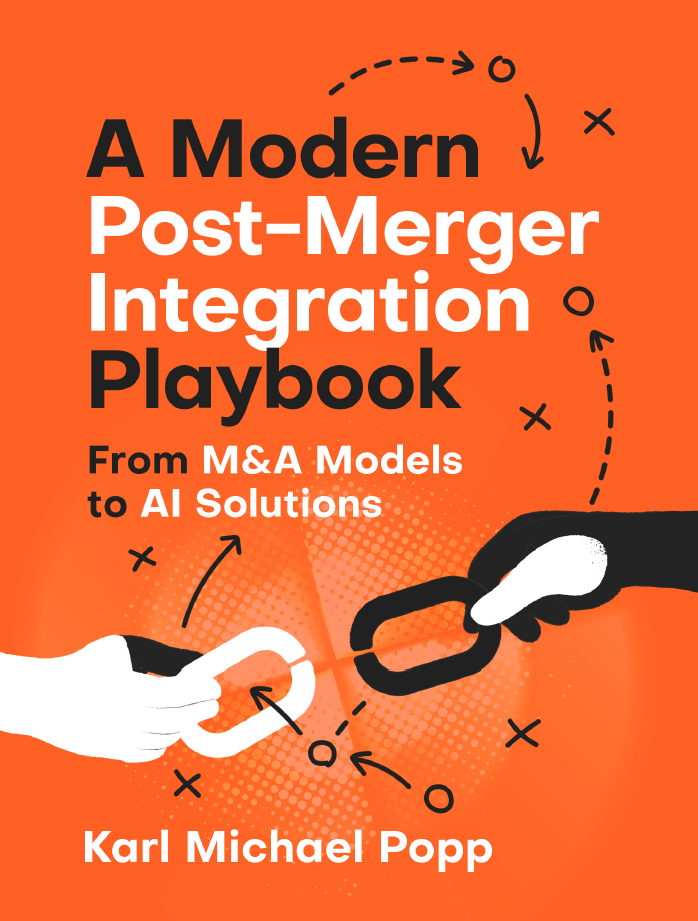
A Modern Post-Merger Integration Playbook: From M&A Models to AI Solutions
By Dr. Karl Michael Popp
Master integration due diligence to transform your M&A success. Learn more at manda-automation.com