Full model example: IT integration
THIS IS THE FREE, REDACTED VERSION OF THE TASKS IN THE M&A REFERENCE MODEL AND IT IS LICENSED UNDER Creative Commons Attribution-NonCommercial-ShareAlike 4.0 International THE FULL SET OF DATA HAS TO BE LICENSED COMMERCIALLY Here is an example for the full content of the M&A Reference Model for one task.
1.1 Task IT integration
Task description
Information Technology integration encompasses the systematic endeavor of interconnecting diverse systems, software applications, and technological platforms to facilitate effective communication and collaborative efforts within an organization. This integration is instrumental for enterprises to function with greater efficacy by mitigating redundancies and optimizing operational workflows. It generally entails the synthesis of data, applications, application programming interfaces (APIs), and devices throughout the IT architecture to augment productivity and operational efficiency. The realization of successful IT integration necessitates meticulous planning and execution to ascertain that all components operate synergistically. Ultimately, it bolsters the organization's digital transformation initiatives by fostering uninterrupted data exchange and enhanced system interoperability.
Attributes of the Task
The task is a decision task.
The task problem is structured.
The task has the following goal(s):
r Draft IT integration plan: executed
The task has the following objectives:
r Synergy of the IT processes: maximized
r Hardware synergy: maximized
r Synergy of the application systems: maximized
r Synergy of IT costs: maximized
The task IT integration has the following roles assigned:
r Information technology expert of the buyer
r
Information technology expert of the target
The task consists of the following actions
r Evaluate the IT systems, hardware, software, and networks of both companies to understand the existing IT landscape.
r Determine the IT assets, including servers, databases, applications, and licenses, that need to be integrated or consolidated.
r Map the data flows and systems architecture of both companies to identify overlaps, dependencies, and integration points.
r Create a detailed plan for integrating IT systems, including timelines, resources, and potential risks.
r Prioritize the integration of critical systems that impact business operations and continuity.
r Plan and execute the migration of data from legacy systems to the new integrated IT environment.
r Ensure that data security measures and compliance requirements are met during the integration process.
r Provide training and support to employees on new systems, processes, and tools to facilitate a smooth transition.
r Conduct thorough testing of integrated systems to ensure functionality, performance, and data accuracy.
r Implement change management processes to communicate changes, address concerns, and manage resistance to IT integration.
r
Provide ongoing support and monitoring to
address any issues and optimize IT performance.
The task works on the following data object types, among others:
Costs for the application system of the target for hiring new employees, Costs for the payroll accounting application of the target, Costs for the application to assess employee performance, Costs for financial applications of the target, IT infrastructure, NewCo company, NewCo's information systems automation resources, Hardware of NewCo, NewCo hardware contracts, Information technology of the buyer company, Buyer IT software contracts, Costs of the buyer's application systems, Application systems of the buyer company, Buyer IT applications, Buyer IT Budget, Buyer IT costs, IT staff of the buyer, Buyer's IT building, Costs of the buyer's IT buildings, Cost of the buyer's hardware, IT infrastructure of the buyer, Cost of the buyer's IT staff, Buyer IT policy, Buyer IT processes, Buyer IT projects, IT service provider contract of the buyer, Cost of the buyer's IT services, IT service provider of the buyer, Buyer IT strategy, Draft IT integration plan, Application systems, NewCo application of accounting and valuation options, Contracts for NewCo GTM applications, Legal aspect of the GTM application contract, Costs for NewCo GTM applications, GTM applications of NewCo, NewCo's application system for hiring new employees, Information Technology of NewCo, NewCo IT software contracts, Legal aspects of NewCo IT software contracts, Tax Aspects of NewCo's Application Contract, Cost of NewCo's application systems, Application systems of NewCo, NewCo application systems risk, Applications for NewCo IT, NewCo IT Budget, NewCo IT Costs, NewCo IT Staff, NewCo IT building, Costs of NewCo IT buildings, Costs of NewCo hardware, IT infrastructure of NewCo, IT infrastructure risk at NewCo, Cost of NewCo's IT staff, NewCo IT policy, NewCo IT processes, NewCo IT projects, NewCo IT service provider contract, Legal aspect of an IT service provider contract of NewCo, Tax aspect of NewCo's IT service provider contract, NewCo IT service provider costs, IT service provider of NewCo, NewCo IT Strategy, Payroll application of NewCo, Employee Performance Assessment Application, Design application for NewCo products, NewCo production execution control application system, Production application system of NewCo, Shipping application of NewCo production, Maintenance application of the NewCo production facilities, Quality application of NewCo production, NewCo production resource management application, NewCo production planning application, Parts tracking application on the NewCo shop floor, Contracts for NewCo Strategic Applications, Legal Aspect of NewCo strategy application contract, Costs for NewCo strategy applications, NewCo strategy applications, Contracts for NewCo tax applications, Legal aspect of the tax application contract of NewCo, Costs for NewCo Tax Applications, NewCo's tax applications, Design application for products, Control application system of production execution, Shipping application in production, Maintenance application of the production equipment, Quality application of production, Production resource management application, Production planning application, Parts Tracking Application in Production, Finance applications of the target, Legal aspect of the GTM Application Contract, Contracts for target GTM applications, Costs for target GTM applications, GTM applications of the target, Application system of the target for hiring new employees, Information technology of the target company, Tax aspect of the target application contract, Target IT software contracts, Legal aspects of target IT software contracts, Costs of the target's application systems, Application systems of the target company, Application system risk, Applications for target IT, Target IT Budget, Target IT Costs, IT employees of the target, Target IT building, Costs of target IT buildings, Costs of the target's hardware, IT infrastructure of the target, IT infrastructure risk, Cost of the target's IT staff, Target IT Policy, Target IT processes, Target IT projects, IT service provider contract, Legal aspect of an IT service provider contract of the target, Tax aspect of the target IT service contract, IT service provider costs, IT service provider of the target, Target IT strategy, Payroll application of the target, Application for assessing employee performance, Production application system of the target company, Legal aspect of the target strategy application contract, Contracts for target strategy applications, Costs for target strategy applications, Strategy applications of the target, Legal aspect of the tax application contract, Contracts for target tax applications, Costs for target tax applications, Target's tax applications,
Questions to be used during the execution of the task
The task is executed with the following questions, among others:
r How will IT systems be integrated across both companies?
r What are the key performance indicators for IT integration?
r How will we manage data migration during the transition?
r What is the timeline for integrating IT infrastructure?
r How will we ensure cybersecurity during the integration?
r What are the potential risks to IT system continuity?
r How will we handle discrepancies in IT standards?
r What is the plan for integrating network operations?
r How will we manage software licenses during the integration?
r What systems will be used to monitor IT efficiency?
r How will we align IT support services between the two entities?
r What is the approach for integrating IT technologies?
r How will we ensure compliance with IT regulations?
r What are the contingency plans for IT disruptions?
r How will we manage and track changes in IT costs?
r What is the strategy for integrating IT teams?
r How will we communicate IT changes to stakeholders?
r What tools will be used for project management in IT integration?
r How will we assess the impact of integration on IT performance?
r What is the plan for training employees on new IT systems?
r How will we ensure cultural alignment in IT teams?
r What are the criteria for evaluating IT integration success?
r How will we manage IT-related conflicts?
r What is the approach for integrating IT-related systems?
r How will we track the progress of IT integration initiatives?
r What is the plan for integrating IT-related customer service?
r How will we ensure effective communication across IT teams?
r What are the potential challenges in IT integration?
r How will we evaluate the impact of integration on IT timelines?
r What is the strategy for integrating IT-related marketing?
r How will we manage IT-related strategic partnerships?
r What processes are in place to resolve IT-related issues?
r How will we align IT strategies with overall business goals?
r What is the approach for integrating IT-related compliance?
r How will we ensure effective data governance post-integration?
r What is the plan for integrating cloud services?
r How will we manage IT-related vendor relationships?
r What is the strategy for integrating IT-related innovation?
r How will we ensure IT system scalability post-merger?
r What are the best practices for IT integration in mergers?
r How will we evaluate the impact of IT integration on business operations?
r What are the projected expenditures associated with the payroll accounting application of the target entity during and subsequent to the merger process?
r In what manner will the expenses related to the application for evaluating employee performance be assessed and managed in the post-transaction phase?
r What considerations must be taken into account regarding the expenditures for financial applications of the target as part of the integration process?
r What are the principal IT challenges and opportunities that the NewCo organization will encounter subsequent to the merger or acquisition?
r In what way will the integration influence NewCo''s information systems automation resources and their prospective scalability?
r What are the essential factors to consider for harmonizing the hardware of NewCo with the wider organizational infrastructure?
r What contractual obligations and risks are associated with the hardware contracts of NewCo following the transaction?
r How will the information technology of the acquiring company facilitate the integration and future operations of the combined entity?
r What are the primary compliance and operational challenges concerning the IT software contracts of the acquirer in the context of the merger?
r In what manner will the expenses pertaining to the application systems of the acquirer be managed and optimized following the acquisition?
r What integration strategies are essential for the application systems of the acquirer to ensure the continuity of business operations?
r How will the functionality and compatibility of the IT applications of the acquirer be evaluated during the integration process?
r What are the principal factors that affect the IT budget of the acquirer in the context of the merger or acquisition?
r How should the roles and responsibilities of the IT personnel of the acquirer be redefined to facilitate the integration process?
r What are the key considerations for the utilization of the IT infrastructure of the acquirer within the new organizational framework?
r In what manner will the costs associated with the IT facilities of the acquirer be allocated and managed post-merger?
r What are the principal factors influencing the expenses associated with the hardware of the acquirer during the integration phase?
r How will the expenses related to the IT personnel of the acquirer be evaluated in the context of the newly formed entity?
r What modifications or updates may be necessary for the IT policy of the acquirer to align with the merged organization?
r In what manner will the contract with the IT service provider of the acquirer be reviewed to ensure ongoing service and compliance?
r What are the primary determinants for the expenses associated with the IT services of the acquirer following the transaction?
r How will the IT service provider of the acquirer be integrated into the new operational framework?
r What are the principal risks and integration challenges associated with the application systems?
r How will the NewCo application of accounting and valuation options be executed to ensure consistency and compliance?
r What are the legal and operational ramifications of contracts concerning NewCo''s go-to-market applications post-merger?
r In what manner will the legal aspects of the go-to-market application contract be addressed to ensure compliance and risk mitigation?
r What are the principal factors that influence the expenditures associated with NewCo''s go-to-market applications subsequent to the integration?
r In what manner will the go-to-market applications of NewCo be scrutinized for compatibility with the existing systems?
r What prerequisites must be fulfilled to integrate NewCo''s application system for the recruitment of new personnel with the current human resources processes?
r How will the information technology framework of NewCo be evaluated and integrated to facilitate prospective growth?
r What are the key risks and obligations pertaining to NewCo''s information technology software contracts within the merged entity?
r In what manner will the legal dimensions of NewCo''s information technology software contracts be managed to ensure regulatory compliance?
r What are the primary compliance and efficiency considerations concerning the taxation aspects of NewCo''s application contract?
r How will the expenses associated with NewCo''s application systems be assessed and managed following the merger?
r What integration measures are essential for the application systems of NewCo to guarantee operational efficiency?
r How will the risks associated with the NewCo application systems be evaluated and mitigated during the transition phase?
r What are the principal considerations for integrating NewCo''s information technology applications with the existing business processes?
r In what manner will the budget for NewCo''s information technology be allocated and managed to facilitate the integration process?
r What are the primary considerations for restructuring the information technology personnel of NewCo following the merger?
r How will the physical infrastructure of NewCo''s information technology be utilized and integrated into the consolidated company''s architecture?
r What are the principal factors influencing the expenditures associated with NewCo''s information technology infrastructure post-integration?
r In what manner will the costs pertaining to NewCo''s hardware be monitored and managed throughout the integration process?
r What are the significant risks associated with the information technology infrastructure at NewCo following the merger?
r How will the costs related to NewCo''s information technology personnel be determined and managed within the new organizational framework?
r What modifications may be necessitated for NewCo''s information technology policy to align with the objectives of the merged entity?
r In what manner will the contract with NewCo''s information technology service provider be assessed for compliance and continuity?
r What are the principal legal considerations regarding the legal dimensions of NewCo''s information technology service provider contract?
r How will the taxation aspects of NewCo''s information technology service provider contract be managed to ensure compliance?
r What are the primary factors impacting the costs associated with NewCo''s information technology service providers during the integration?
r In what manner will the information technology service provider of NewCo be assimilated into the operations of the new company?
r What are the primary integration and compliance challenges related to the payroll application of NewCo?
r How will the application for employee performance assessment be evaluated and integrated following the merger?
r What are the essential requirements for the design application for NewCo''s products within the context of the merger?
r What are the primary priorities for the integration of the production resource management application within the newly formed organization?
r In what manner will the production planning application be modified to align with the strategic objectives of the consolidated company?
r What are the specifications for the parts tracking application in production to facilitate post-merger operations?
r How will the financial applications of the target be assessed and assimilated into the processes of the new entity?
r What are the principal risks and compliance issues concerning the legal aspects of the gtm application contract subsequent to the merger?
r What are the primary priorities for the examination of contracts pertaining to target gtm applications following integration?
r In what manner will the expenses associated with target gtm applications be administered and optimized throughout the integration process?
r What are the principal integration and compatibility challenges associated with the gtm applications of the target?
r How will the application system utilized by the target for the recruitment of new employees be integrated with the human resources processes of the new company?
r What are the key challenges in harmonizing the information technology of the target organization with the new organizational framework?
r How will the tax considerations of the target application contract be managed to ensure compliance within the new entity?
r What are the primary risks and obligations linked to the target IT software contracts following the merger?
r In what manner will the legal aspects of the target IT software contracts be managed to ensure compliance post-integration?
r What are the principal factors influencing the costs of the target''s application systems during the transition phase?
r How will the application systems of the target organization be assessed and integrated to ensure business continuity?
r What are the primary priorities for the integration of target IT applications with existing processes?
r How will the budget for target IT be allocated and managed during and after the integration?
r What are the main considerations regarding the utilization of the target IT infrastructure within the new organizational framework?
r How will the expenses related to target IT infrastructure be monitored and managed throughout the integration process?
r What are the key factors influencing the costs associated with the target''s hardware during the transition?
r How will the expenses related to the target''s IT personnel be determined and managed within the new entity?
r What modifications may be necessary for the target IT policy to align with the objectives of the merged organization?
r What are the principal compliance and operational challenges associated with the IT service provider contract during the integration phase?
r In what manner will the legal aspects of the IT service provider contract of the target be managed following the merger?
r What are the critical considerations for managing the tax aspects of the target IT service contract subsequent to the transaction?
r How will the costs related to the IT service provider be evaluated and optimized throughout the integration process?
r What are the principal integration and compliance challenges associated with the IT service provider of the target entity?
r What are the primary objectives for aligning the payroll application of the target with the operational processes of the new company?
r In what manner will the evaluation and management of the application for assessing employee performance be conducted following the merger?
r What are the significant factors to consider when integrating the production application system of the target organization with existing operations?
r How will the legal aspects of the target''s strategic application contract be administered to ensure adherence to compliance requirements?
r What are the foremost priorities for the review of contracts pertaining to target strategic applications subsequent to the merger?
r In what manner will the costs associated with target strategic applications be managed and optimized within the newly formed entity?
r What are the principal integration and compatibility challenges related to the strategic applications of the target organization?
r How will the legal aspects of the tax application contract be administered to ensure compliance subsequent to the integration?
r What are the primary priorities for conducting a review of contracts associated with target tax applications following the merger?
r In what manner will the costs related to target tax applications be managed and monitored throughout the integration process?
r What are the principal integration and compliance challenges associated with the tax applications of the target within the new organizational structure?
r What is the current capacity and expertise of the buyer''s IT staff to support additional systems?
r How does the buyer's IT building infrastructure accommodate potential expansions or new hardware requirements?
r What are the projected maintenance and upgrade costs of the buyer''s IT buildings over the next five years?
r How does the cost of the buyer''s IT staff compare to industry benchmarks for similar-sized organizations?
r What are the initial and ongoing costs for NewCo GTM applications, including licensing and customization?
r What are the estimated operational costs of NewCo IT buildings, including utilities and security?
r What is the breakdown of the cost of NewCo''s IT staff, including salaries, training, and benefits?
r What legal considerations govern the termination clauses in NewCo''s IT service provider contract?
r How do tax implications affect the structuring of NewCo''s IT service provider contract?
r What redundancies are in place for the NewCo production execution control application system during peak loads?
r How frequently is the maintenance application of the NewCo production facilities updated for compliance?
r What integration capabilities exist for the parts tracking application on the NewCo shop floor with existing ERP systems?
r What liability clauses are included in the legal aspect of NewCo''s strategy application contract?
r Are there hidden costs for NewCo strategy applications, such as data migration or user training?
r How scalable is the control application system of production execution to handle increased throughput?
r What is the failure rate of the maintenance application of the production equipment in high-stress environments?
r What are the current leasing or ownership costs of the target IT buildings, and are they negotiable?
r How does the cost of the target''s IT staff align with the anticipated post-acquisition organizational structure?
Task automation
Automatability
This task is partially automatable.
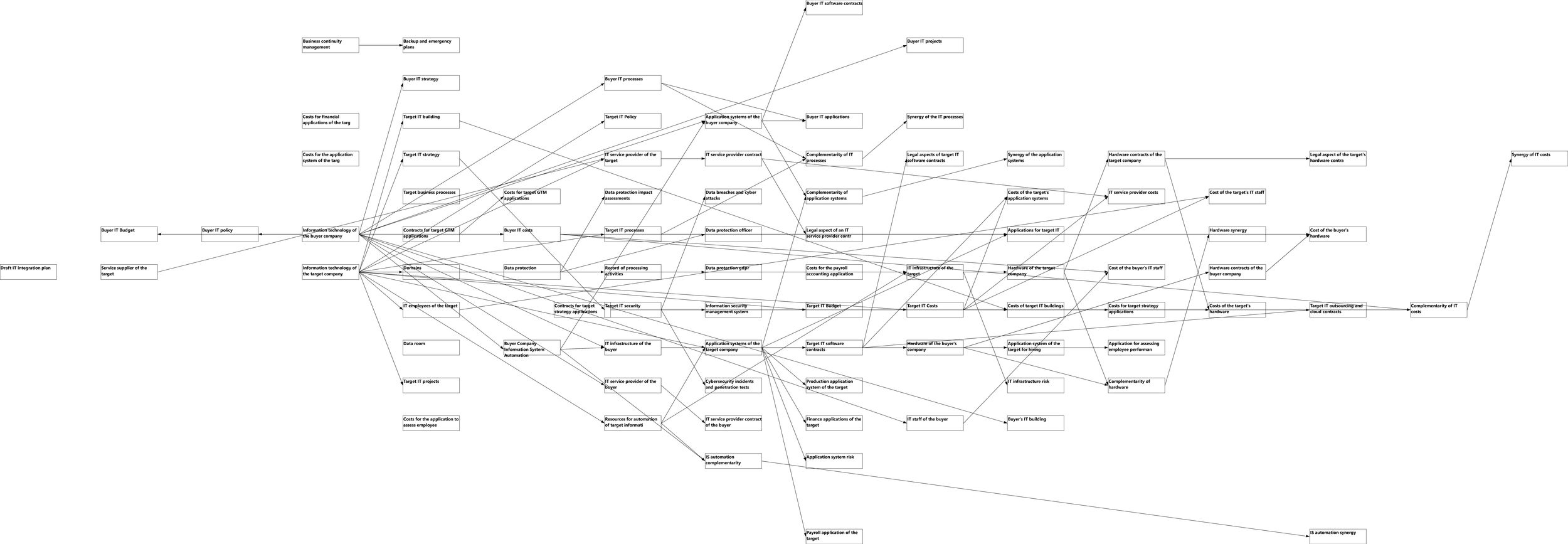
IT Due Diligence Data model
(C) Dr. Karl Michael Popp 2025